


Suitable for food packaging is determined directly by the product freshness, user security and brand image. However, businesses are often faced with a dilemma: to choose practicality, aesthetics or sustainability? In this article you will find clear criteria to understand what package best suited for different food products.
Understand what features need to be for your product
There is no single universal packaging for all food products—the most suitable solution depends on product characteristics. Different products require a different combination of protection, design, and materials, making it essential to assess what matters most for your product: moisture protection, fragility, temperature resistance, or visual appeal.
Products with the fat, moisture or intensive scent
Fat- and moisture-sensitive products require barrier packaging that prevents leakage and odor migration while ensuring product freshness. This is especially important for fatty baked goods, cheese, or nuts. Typical solutions: plastic-free cardboard packaging with barrier layers that protect against moisture.
Brittle and easily damaged products
Fragile products, such as confectionery or desserts, require additional structural fastening. Important reinforced edges, partitions or special box design, which protects the products during transport and during storage. Such packaging shall ensure that the product reaches the consumer intact and will retain its aesthetic value.
Frozen Food Products
Products supplied frozen require packaging that is resistant to temperature fluctuations. Custom structural designs and material combinations help protect the product from deformation, moisture exposure, or freezer burn during freezing. Such packaging is suitable for both manual and automated packing, ensuring product safety throughout the supply chain.
After evaluating the fat, moisture, fragility or temperature sensitivity, you can select designs and materials, which not only protects the product, but also improves the user experience and strengthen the brand image. This is the first step in creating a professional, safe and attractive food packaging.
Consider the hygiene and safety requirements
When choosing food packaging, safety and hygiene are the cornerstones of the criteria. Even short-term contact with food may present a risk if the package do not have the appropriate certificates. It is therefore important to ensure that the manufacturer can confirm the packaging safety and compliance standards such as the FSSC 22000.
Certificates for food contact – what do they mean?
Packaging intended for direct food contact must carry appropriate certifications, such as FSSC 22000. This international standard ensures that the manufacturing process adheres to strict hygiene and food safety requirements. Choosing uncertified packaging even for short-term contact can pose risks ranging from consumer health issues to legal consequences for the business. Therefore, certified material is essential, even if the product is consumed quickly.
Inside printing
Sometimes businesses want to print logos or information on the inside of the packaging. Inside printing is suitable when the product is dry and non-greasy, and food contact is short-term. However, for long-term storage or in the presence of fat or moisture, inside printing may be unsuitable because inks can migrate into the food and compromise its quality or safety. In addition, the print must be coated with a barrier – varnish or film.
Both product quality and consumer trust depend on safety and hygiene. By choosing manufacturers certified to standards such as FSSC 22000 and using safe, food-grade inks, you can be sure that the packaging complies with legal requirements and helps strengthen your brand reputation.
The package selection according to product category
Food packaging has to be tailored to the specific category – one properties suitable for confectionery, other bulk products or frozen products. Properly chosen packaging not only protects the product but also enhances its visual attractive and user experience.
Confectionery packaging
For confectionery products, not only protection is important, but also aesthetic appearance. Fragile products such as desserts require specific protection. confectionery packaging with partitions that maintain shape and protect against impact during transport. Windows allow consumers to clearly see the product, while an attractive design enhances brand image.
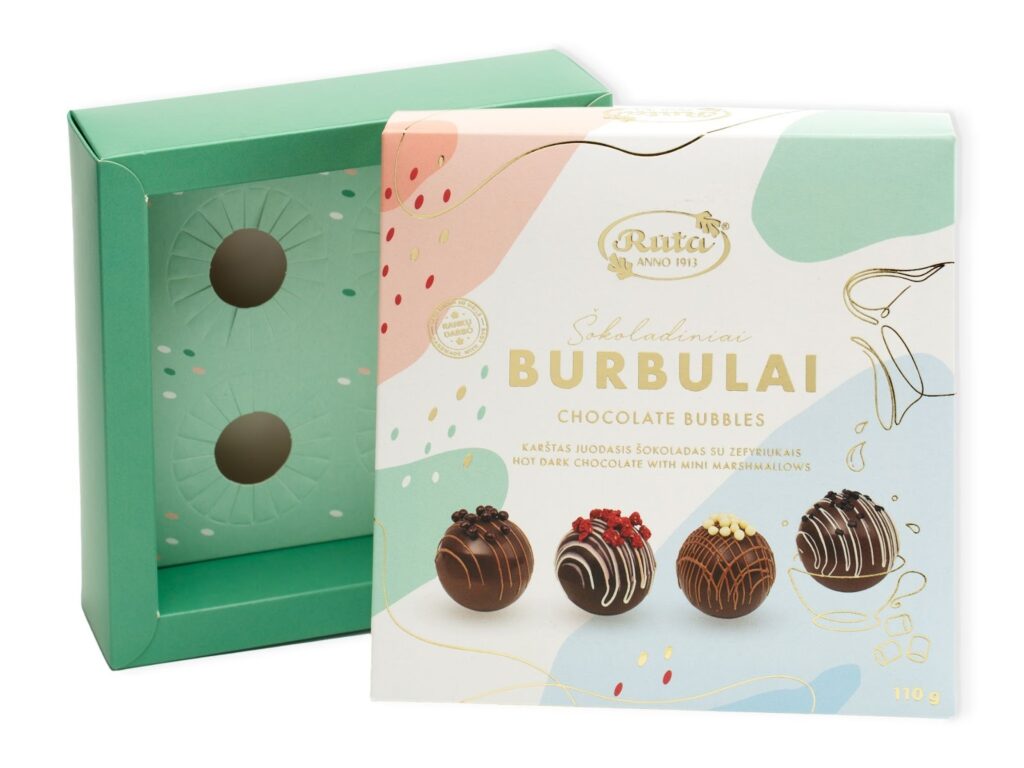
Example: "Rūta" chocolate box with an internal insert solution, securing and allowing safe transport of desserts. Packaging manufacturer: Trustpack.
Coffee, tea and bulk products packaging
These products particularly important for protection from moisture and flavours of the migration. Barrier the package for bulk food products helps preserve aroma and quality, ensuring that bulk dry products are not affected by environmental factors. A proper structural design also facilitates storage and transport.
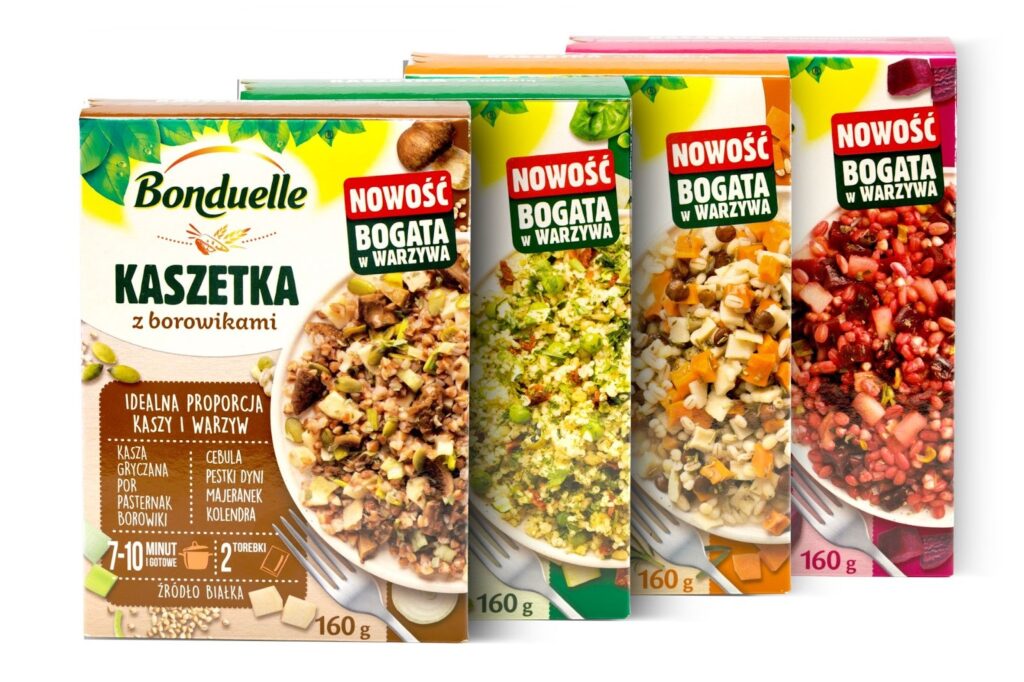
Example: ’’Bonduelle’’ porridge packaging to protect the product. The packaging manufacturer: Trustpack.
Frozen products packaging
Frozen food packaging Resistance to moisture, cold, and mechanical damage is particularly critical. Packaging must be certified for direct contact with food, ensuring hygiene and safety throughout the entire product lifecycle. The structures must securely hold the product, protect against leakage and odour migration, and retain their shape during transport and freezing.
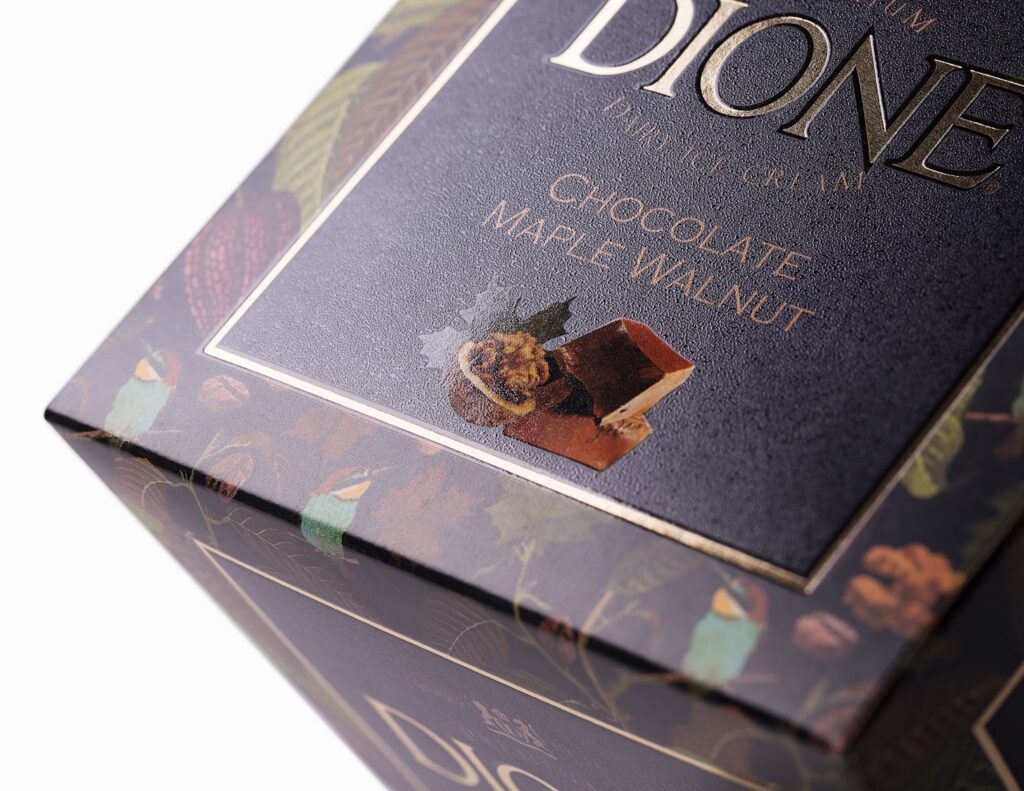
Example: ’’Dione’’ ice cream packaging, protects the product from humidity and cold. The packaging manufacturer: Trustpack.
Direct Food Contact Packaging
This packaging for products which come into contact directly with food – from meat and fish to desserts. Direct Food Contact Packaging must be made from certified materials that ensure hygiene and safety throughout the entire consumption cycle.
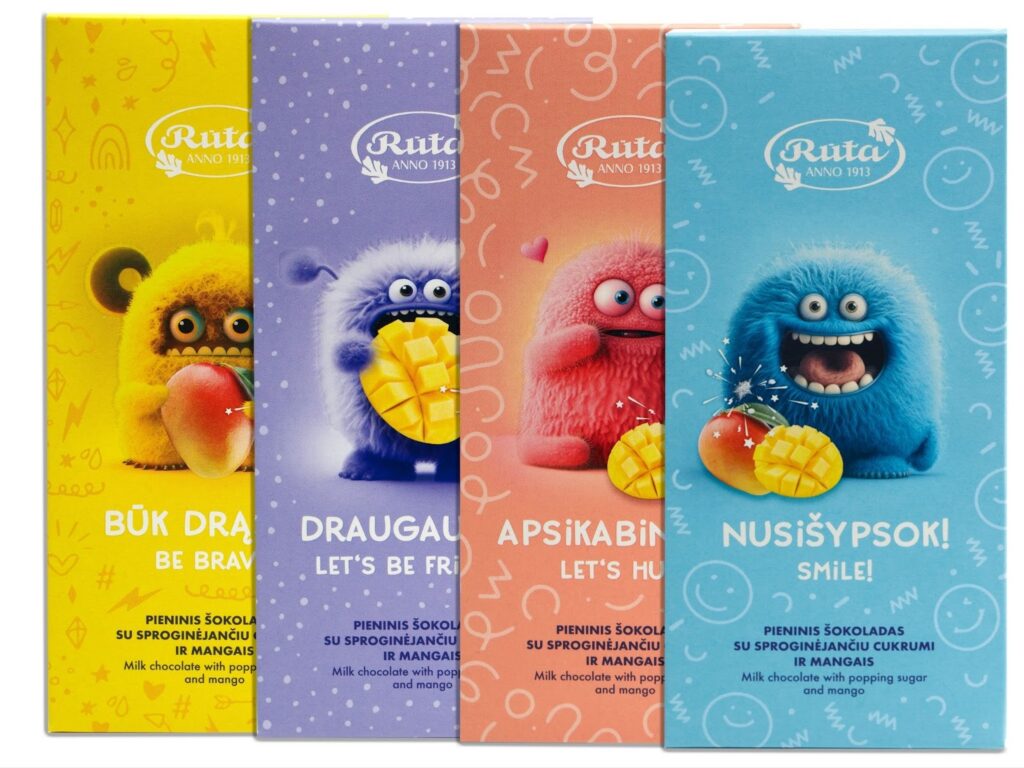
Example: ,,Rūta’’ packaging. The packaging manufacturer: Trustpack.
Selecting the right packaging according to the product category, you can ensure not only the safety and freshness, but also to strengthen the brand image and user experience. Appropriate design and features helps to distinguish the product in the market and customize the packaging of both the logistics and convenience to the user.
Structural solutions for productive manufacturing, efficient logistics, and sales promotion
Food packaging not only protects the content, but also help to optimise the production, storage and sales processes. Appropriate design can save time on packaging lines, reduce the risk of damage, and improve the presentation of the final product to the consumer.
Automatic bottom (quick shape)
Auto-lock bottom designs allow boxes to be assembled quickly and reliably, which is especially important for high-volume production lines. Such a solution ensures that the box remains stable from the first to the last stage of product packaging, reduces labor costs, and helps maintain consistent product presentation.
4/6 corners design
These structures provide additional stability to the boxes, especially when holding heavier or non-standard shaped products. 4/6 corner packaging helps reduce the risk of deformation during transport and ensures safe product storage both in the warehouse and at retail points.
Partitions and inserts (fragile production)
Fragile products, such as desserts or confectionery, require additional protection. Partitions and inserts help hold individual items in place, protecting them from collision and deformation. Such a design ensures that the product reaches the consumer intact and maintains its aesthetic appearance.
Gluing, folding, and die-cutting accuracy — why is it important?
Precise gluing, folding, and die-cutting ensure the package's shape stability and durability. Even a small percentage of inaccuracies can lead to damage or inconvenient use. Modern technology allows the production of complex structures, while maintaining a high level of quality, irrespective of product type or size.
Properly chosen design not only protects the product, but also optimizes the entire supply chain – from production to sales. An investment in functional design solutions help businesses reduce losses, increase efficiency and improve the user experience.
Sustainability: how to choose more sustainable food packaging?
Sustainability an important criterion for both small and large food businesses. Businesses often ask how to combine a green solution with product safety, freshness and an attractive design.
Recyclability is one of the sustainable packaging advantages, however, it is important to evaluate characteristics of the product. The cardboard packaging provides sufficient strength and protection against moisture and mechanical damage, so it can be practical and environmentally friendly solution for many food products.
Cardboard food packaging solutions
Appropriate food packaging choice requires understanding of the characteristics of the product, hygiene and safety requirements and transportation conditions. Organic solutions such as cardboard packaging with certified materials, helping to reduce environmental impact, while maintaining product quality and consumer trust.
It is important to select the reliable manufacturers, who can offer certified and tested solutions, which not only ensures product safety, freshness and adequate user experience, but also increases the efficiency of the business. If you have questions about a specific product or want to discuss the most suitable packaging solution contact and receive a quote within 24 hours.
.